
Diabetic Foot Care: A Daily Checklist to Prevent Complications
Diabetes commonly causes peripheral neuropathy, reducing sensation in the feet, and peripheral arterial disease, which slows wound healing.
Read More

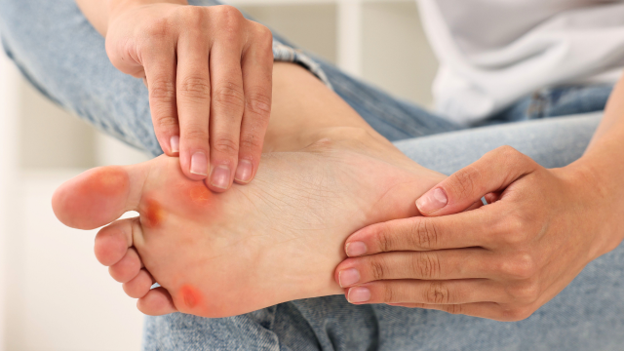


Corns and calluses are among the most common foot concerns we see, and while they are often dismissed as a minor nuisance, they are the body's response to repeated pressure or friction, which means the underlying cause deserves attention. At Foot and Ankle Specialists of The Woodlands, Huntsville and Downtown Houston, our approach is to address the cause, not just the symptoms, so that relief lasts.
A callus is a broad area of thickened, hardened skin that develops where the skin experiences repeated pressure or friction, most often on the heel, ball of the foot, or the side of the big toe .A corn is a smaller, more concentrated area of thickened skin with a hard center, which typically forms on the toes or between them and can be painful when pressed.
Thick, rough, or flaky patches of skin, a hard bump surrounded by irritated skin, and pain or tenderness when walking or when pressure is applied are the most common signs. A thickened area that becomes red, warm, or drains may indicate irritation or infection and should be evaluated.
A callus is a broad area of thickened, hardened skin that develops where the skin experiences repeated pressure or friction, most often on the heel, ball of the foot, or the side of the big toe. A corn is a smaller, more concentrated area of thickened skin with a hard center, which typically forms on the toes or between them and can be painful when pressed.
Thick, rough, or flaky patches of skin, ahard bump surrounded by irritated skin, and pain or tenderness when walking orwhen pressure is applied are the most common signs. A thickened area thatbecomes red, warm, or drains may indicate irritation or infection and should beevaluated.
Treatment begins with identifying why theskin is under pressure, and may include:
Cutting or shaving corns and calluses athome, or using strong medicated products, can lead to injury and infection.This is especially important for patients with diabetes, poor circulation, orreduced sensation in the feet, who should have thickened skin evaluated andtreated by a professional.
Schedule an evaluation if a corn or callus is painful, keeps returning, orlimits your activity, if the skin is red, swollen, or draining, or if you havediabetes or circulation problems. Our experienced providers use advanceddiagnostics to find the source of the pressure and create an individualizedtreatment plan.
With decades of combined experience andhundreds of five-star reviews, our team is proud to serve The Woodlands,Houston, and Huntsville. Book an appointment with Foot and Ankle Specialists ofThe Woodlands, Huntsville and Downtown Houston and stay a step ahead of footpain.

Diabetes commonly causes peripheral neuropathy, reducing sensation in the feet, and peripheral arterial disease, which slows wound healing.

Discover expert tips to prevent sports injuries and manage flat feet ache. Learn how proper footwear, stretches, and professional care from Foot & Ankle Specialists