
Diabetic Foot Care: A Daily Checklist to Prevent Complications
Diabetes commonly causes peripheral neuropathy, reducing sensation in the feet, and peripheral arterial disease, which slows wound healing.
Read More
--(3-x-1-in).jpg)



Finding a lump on the ankle can be unsettling, especially when you don’t know what caused it or whether it needs medical attention. Some ankle lumps are harmless, while others may indicate inflammation, soft-tissue irritation, joint changes, or a lingering injury that never fully healed. Understanding the most common causes can help you know what the lump might mean, and when it’s time to see a podiatrist.
Whether you’re dealing with a hard lump on the ankle, a small hard lump on the ankle bone, or a tender bump on the back of the ankle, this guide explains the likely reasons these bumps form and what symptoms to watch for.
A lump can originate from skin, soft tissue, bone, tendons, or the joint itself. Here are the conditions podiatrists see most often:
Ganglion cysts are among the most common causes of a lump on my ankle. These fluid-filled sacs often appear near joints or tendons and may fluctuate in size.
Typical signs include:
Ganglion cysts are benign but can return even after treatment.
A hard lump on the ankle, especially one that doesn’t move, is often a bone spur. Spurs form due to chronic irritation, arthritis, or repetitive pressure from shoes or activity.
Common symptoms:
A small hard lump on the ankle bone is frequently linked to long-term mechanical stress or degenerative changes.
A lipoma is a benign fatty growth that forms under the skin.
Features include:
Lipomas rarely require removal unless they become irritated or continue to enlarge.
The ankle contains small fluid-filled sacs called bursae that help reduce friction. When irritated, these bursae can swell and create a noticeable lump.
Symptoms may include:
Bursitis often results from repetitive friction or overuse.
Inflammation along a tendon can create a visible lump, especially around the Achilles or peroneal tendons.
Symptoms:
This type of swelling often develops slowly.
Even after a sprain has healed, some people develop lingering swelling or scar tissue that forms a small lump.
You may notice:
A past injury is one of the most common reasons for a persistent lump on the ankle.
Arthritis can cause joint swelling, fluid buildup, or bony enlargement around the ankle.
Signs may include:
These changes usually develop gradually over time.
Although uncommon, infections, vascular abnormalities, and certain tumors can present as ankle lumps. These require prompt medical evaluation.
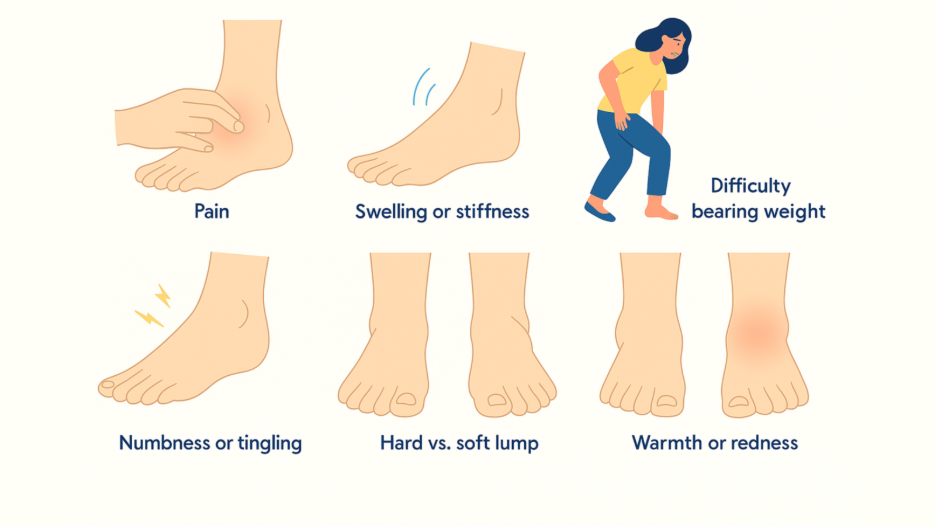
Symptoms can provide important clues about the underlying cause.
Pay attention to whether the lump changes in size, becomes painful, or affects daily activity.
A podiatrist evaluates the lump to determine its type and whether treatment is necessary. Diagnosis may include:
Accurate diagnosis ensures you receive the right treatment.
You should schedule an evaluation if:
Early evaluation helps prevent complications and ensures proper care.
Treatment depends entirely on the cause. A podiatrist may recommend:
The goal is to reduce pain, restore function, and prevent recurrence.
A lump on the ankle is common, but the underlying cause determines the best treatment. Whether it's a cyst, a small hard lump on the ankle bone, swelling after injury, or a bump on the back of the ankle, a podiatrist can provide clarity and relief.
Book an appointment today with FAS The Woodlands to get the right diagnosis and personalized care for your ankle lump.
📍 Serving The Woodlands, Huntsville, and Houston
https://www.fasthewoodlands.com/contact

Diabetes commonly causes peripheral neuropathy, reducing sensation in the feet, and peripheral arterial disease, which slows wound healing.

Discover expert tips to prevent sports injuries and manage flat feet ache. Learn how proper footwear, stretches, and professional care from Foot & Ankle Specialists