
Diabetic Foot Care: A Daily Checklist to Prevent Complications
Diabetes commonly causes peripheral neuropathy, reducing sensation in the feet, and peripheral arterial disease, which slows wound healing.
Read More
--(3-x-1-in).jpg)
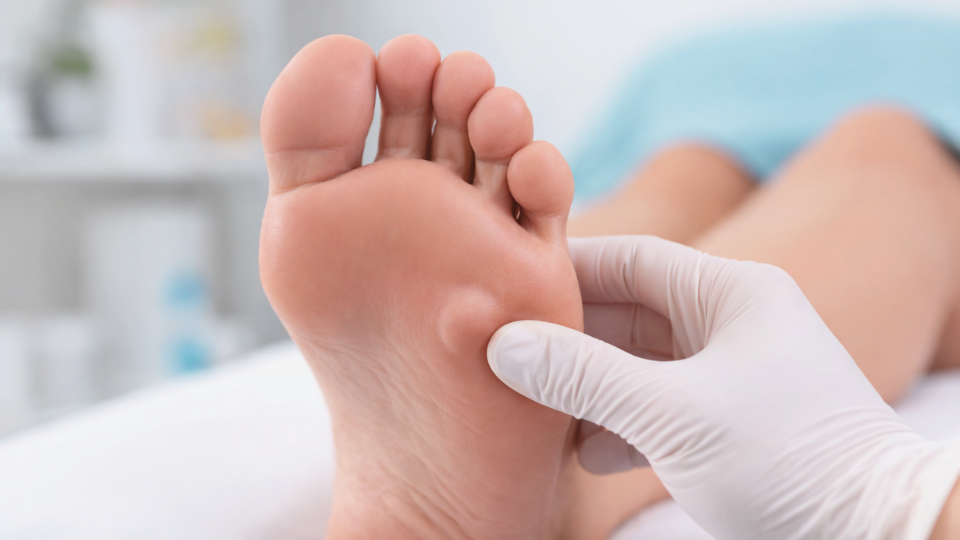


Noticing a bump on the bottom of my foot can be uncomfortable, and sometimes alarming, especially when it begins to interfere with walking or standing. These bumps may feel firm or soft, painful or painless, and can appear suddenly or develop gradually over time. While some are related to pressure or irritation, others involve deeper structures like soft tissue, nerves, or the plantar fascia.
Understanding why these bumps form and what symptoms to watch for can help you determine when simple care is enough and when podiatric evaluation is necessary.
The sole of the foot absorbs significant force with every step. Repetitive stress, pressure, and friction can gradually lead to changes in the skin or underlying tissue. Common contributing factors include:
Because this area is constantly bearing weight, even minor tissue changes can result in a noticeable bump on the bottom of my foot.
Many bumps also develop or worsen with repetitive stress or increased physical activity. Running, jumping, or sports-related strain can irritate soft tissue and contribute to painful nodules or knots, particularly when combined with inadequate recovery or footwear. If your symptoms began after increased activity or an injury, you may find it helpful to explore how activity-related foot and ankle conditions are evaluated and treated on our sports injuries page.
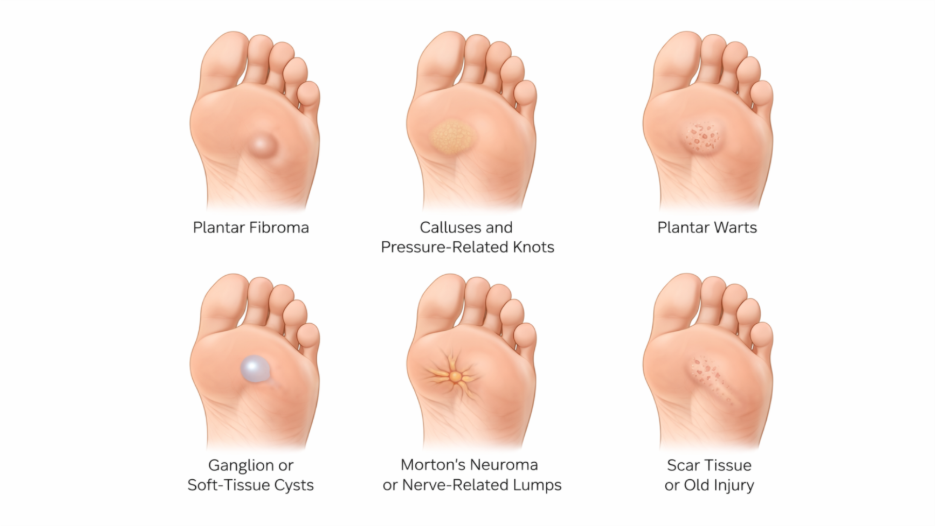
A plantar fibroma is a benign growth within the plantar fascia, most often in the arch. It typically feels firm and may become more noticeable when standing or walking. Many patients describe this as a hard nodule on the sole of foot, especially as pressure increases.
Repeated friction or uneven weight distribution can cause thickened skin that feels like a deep lump. These pressure-related areas are often described as knots on foot bottom or knots on bottom of feet, particularly under the ball or heel.
Plantar warts are caused by a viral infection and develop on the sole of the foot. They are often painful when squeezed from the sides and can be mistaken for calluses or nodules.
Fluid-filled sacs may form near tendons or joints and feel rubbery or movable. These may present as a foot nodule on sole and can change in size over time.
A thickened nerve under the ball of the foot can cause burning, tingling, or the sensation of stepping on a pebble. Some patients notice this as a subtle nodule on bottom of foot rather than a visible lump.
Previous trauma, such as stepping on a sharp object or repetitive strain, can lead to localized scar tissue. This may feel like a persistent knot bottom foot, especially when pressure is applied.
Symptoms can provide important clues about what’s causing the lump. Common signs include:
Any symptom that persists or worsens should be evaluated by a podiatrist.
Diagnosis begins with a physical examination and review of your symptoms. A podiatrist may also use:
Accurate diagnosis ensures appropriate treatment and helps prevent unnecessary discomfort.
You should seek professional care if:
Early evaluation can help prevent worsening pain and long-term complications.
Treatment depends on the underlying cause and how the bump affects daily activity. In many cases, reducing pressure and irritation is the first step. A podiatrist may recommend:
The goal of treatment is to reduce pain, improve function, and prevent the condition from worsening.
While many foot bumps are benign, a persistent or painful bump on the bottom of my foot should not be ignored. Early diagnosis can make a significant difference in comfort and mobility.
If you’re experiencing discomfort or changes in your foot, book an appointment today with FAS The Woodlands to receive an accurate diagnosis and a personalized treatment plan.
📍 Serving The Woodlands, Huntsville, and Houston

Diabetes commonly causes peripheral neuropathy, reducing sensation in the feet, and peripheral arterial disease, which slows wound healing.

Discover expert tips to prevent sports injuries and manage flat feet ache. Learn how proper footwear, stretches, and professional care from Foot & Ankle Specialists