
Diabetic Foot Care: A Daily Checklist to Prevent Complications
Diabetes commonly causes peripheral neuropathy, reducing sensation in the feet, and peripheral arterial disease, which slows wound healing.
Read More
--(3-x-1-in).jpg)



Finding a firm knot or lump on the bottom of your foot can be concerning, especially if it becomes uncomfortable when walking or standing. While some foot lumps are caused by pressure or irritation, others may point to an underlying condition affecting the connective tissue. One possible cause is plantar fascial fibromatosis, a benign condition that leads to the formation of fibrous nodules along the plantar fascia.
Understanding what plantar fibromatosis is, why these knots develop, and how they can be managed can help you make informed decisions about your foot health and mobility.
Plantar fibromatosis is a condition in which excess fibrous tissue forms within the plantar fascia, the thick band of tissue that runs along the bottom of the foot and supports the arch. Over time, this tissue can develop into firm nodules that are often felt in the mid-arch area.
These nodules are non-cancerous and typically slow-growing. In some cases, they may remain painless for long periods. In others, they can become irritated by footwear or pressure, leading to discomfort during daily activities. Clinically, this process is sometimes referred to as plantar fascia fibromatosis, reflecting the involvement of the fascia itself.
The exact cause of plantar fibromatosis is not always clear, but several factors are thought to contribute to the development of these nodules. Repetitive stress or microtrauma to the plantar fascia may play a role, particularly in individuals who spend long periods standing or walking.
Genetics can also be a factor. Plantar fibromatosis is more common in people with a family history of fibrous tissue disorders, including Dupuytren’s contracture of the hand. Certain medical conditions, such as diabetes or liver disease, have also been associated with an increased risk.
Not all lumps on the sole of the foot are caused by fibromatosis. You may find it helpful to learn more about bumps on the bottom of the foot and how they can vary.
Patients with plantar fibromatosis often notice gradual, localized changes in the arch of the foot, including:
In many cases, a fibroma of foot may remain painless at first but become more noticeable over time as pressure and friction increase.

The terms plantar fibroma and plantar fibromatosis are closely related, but they are not exactly the same. This comparison helps explain how they differ.
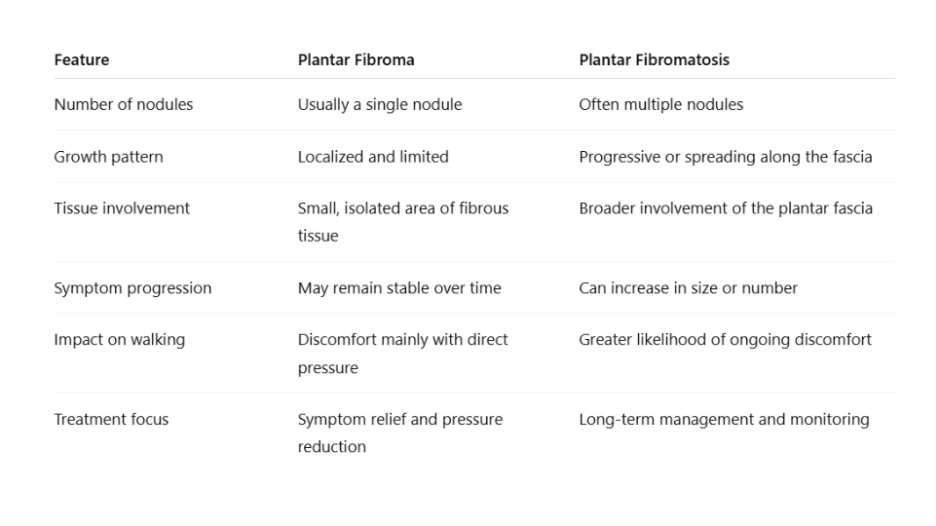
Diagnosis often begins with physical examinations. A podiatrist will evaluate the size, location, and firmness of the nodule and assess how it affects foot mechanics. In many cases, the diagnosis can be made clinically.
If the presentation is atypical or if further detail is needed, imaging studies such as ultrasound or MRI may be used to confirm the diagnosis and rule out other soft-tissue conditions.
Treatment for plantar fibromatosis typically focuses on relieving pressure, reducing irritation, and maintaining mobility rather than removing the nodule itself. Conservative options may include:
These approaches are often effective in managing symptoms and improving daily comfort for many patients.
Most cases of plantar fibromatosis are managed with conservative care. However, if pain persists or begins to interfere with daily activities, additional treatment options may be discussed.
In some cases, injection-based therapies may be considered to help reduce localized discomfort. Surgery is generally reserved for more severe cases where symptoms significantly affect walking and non-surgical treatments have not provided relief. Because surgical treatment carries risks such as recurrence and scar tissue, careful evaluation and individualized decision-making are essential.
A podiatric evaluation may be helpful if you notice:
Early evaluation can help confirm the diagnosis and guide appropriate treatment options.
Plantar fibromatosis can be unsettling, but it is a manageable condition for many patients. With proper evaluation and conservative treatment, discomfort can often be reduced and daily activity maintained.
If you’ve noticed a persistent lump on the bottom of your foot, FAS The Woodlands offers expert podiatric care for patients in The Woodlands, Huntsville, and the Houston area. Book an evaluation online to receive personalized treatment focused on comfort, mobility, and long-term foot health.

Diabetes commonly causes peripheral neuropathy, reducing sensation in the feet, and peripheral arterial disease, which slows wound healing.

Discover expert tips to prevent sports injuries and manage flat feet ache. Learn how proper footwear, stretches, and professional care from Foot & Ankle Specialists