
Ingrown Toenails: When Home Care Stops Working
Ingrown toenails are among the most frequently treated conditions in podiatric medicine, and while many cases resolve with proper at-home care
Read More
--(3-x-1-in).jpg)


A soft corn between toes is a painful skin condition that develops when friction, pressure, and moisture combine in the narrow spaces between the toes. Unlike hard corns that form on dry areas of the foot, soft corns develop in moist environments and often appear white, rubbery, and tender.
Although soft corns between toes are common, they can quickly become inflamed if the underlying cause is not addressed. Early understanding and proper care are key to preventing ongoing discomfort.
A soft corn between toes is a thickened area of skin that forms as a protective response to repeated friction. The most common location is between the fourth and fifth toes, where natural toe positioning creates constant contact.
Some people refer to these as toe corns between toes, but the defining characteristic is their texture. Because this area tends to remain warm and moist, the thickened skin softens instead of hardening. The result is a tender, whitish lesion that may feel sensitive when pressed or when wearing closed shoes.
Several contributing factors can lead to the development of a soft corn between toes:
Repeated rubbing causes the skin to thicken as a protective response. Over time, this friction can result in a corn in between toes that becomes increasingly painful.
Shoes with narrow toe boxes crowd the toes and increase pressure in tight spaces. This ongoing compression is a common cause of soft corns. If your shoes feel restrictive, they may be contributing to irritation. Learn more in our article on what happens when your shoes are too small.
Sweating creates a damp environment between the toes. Moisture softens thickened skin and increases the risk of irritation or infection.
Conditions such as hammertoes or overlapping toes can increase abnormal pressure between digits, making recurrence more likely.
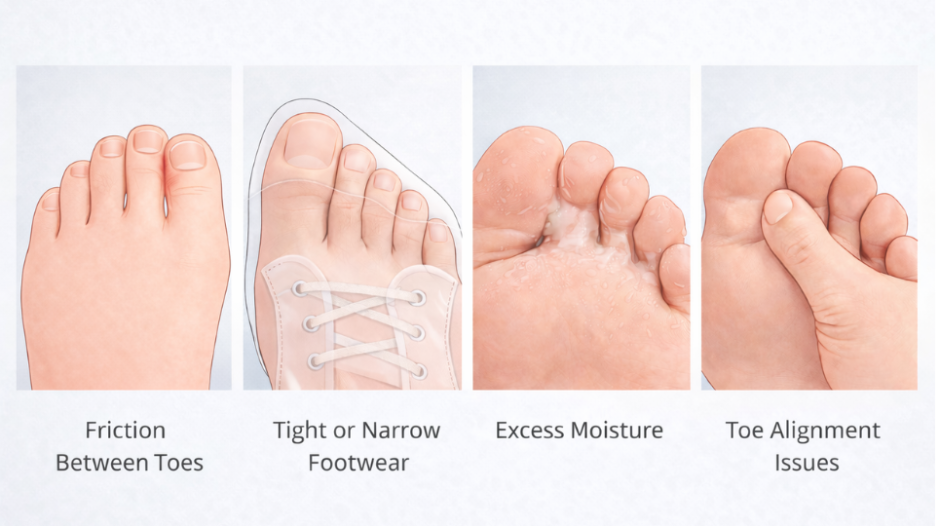
Alt text: Illustrations showing causes of soft corn between toes
A soft corn between toes may cause:
Because the area between the toes is delicate, symptoms can escalate quickly if friction continues. Some patients describe the discomfort by saying they feel a “corn between my toes” especially when pressure increases inside closed shoes.
Many patients search for solutions when discomfort develops, and conservative treatment is often effective in the early stages.
Switching to shoes with a wider toe box reduces crowding and pressure. Breathable materials also help limit moisture buildup.
Silicone spacers can reduce friction temporarily by creating space between the toes.
Keeping the area clean and dry is essential. Moisture-absorbing powders and breathable socks may help reduce irritation.
Attempting to cut or shave thickened skin at home increases the risk of infection. This is especially important for individuals with diabetes or circulation concerns.
Understanding how to get rid of soft corns between toes permanently requires correcting the friction and pressure that caused them.
When conservative measures are not sufficient, professional care can provide safe and effective relief. A podiatrist can carefully remove the thickened tissue using sterile instruments, reducing pressure and discomfort immediately.
More importantly, a thorough evaluation helps identify whether structural alignment, footwear habits, or biomechanical issues are contributing factors. Addressing these underlying causes can significantly reduce recurrence. In rare cases where toe deformities repeatedly create pressure, corrective options may be discussed.
Preventing a soft corn between toes from returning requires addressing the source of irritation. Recurring corns often indicate persistent toe crowding or alignment concerns.
Long-term prevention strategies may include:
When pressure patterns are corrected, recurrence becomes far less common.
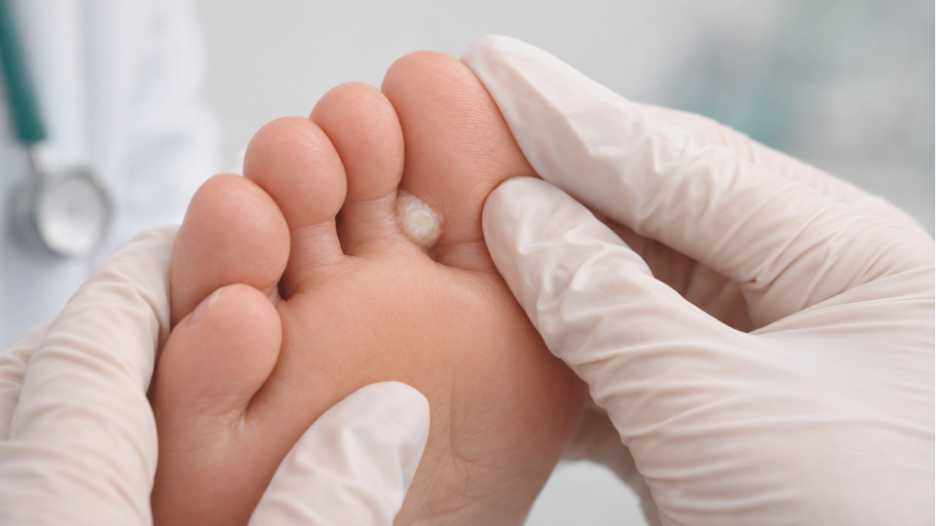
Alt text: Podiatrist examining soft corn between toes in clinic setting
You should seek professional evaluation if:
Early treatment helps prevent complications and reduces the risk of infection.
A soft corn between toes may start as mild irritation, but ongoing friction and moisture can lead to persistent discomfort. Early care often provides relief, while recurring symptoms may require professional evaluation.
If a soft corn between toes continues to cause pain, Foot & Ankle Specialists of The Woodlands serves patients in The Woodlands, Huntsville, and the greater Houston area with comprehensive care. You can explore our locations or book an appointment online to receive personalized treatment focused on lasting relief.
Ingrown toenails are among the most frequently treated conditions in podiatric medicine, and while many cases resolve with proper at-home care
Learn to recognize the symptoms of an infected foot, key warning signs to watch for, and when to see a podiatrist for safe and effective treatment.