Toenail Pain Without an Ingrown Nail: Causes, Treatment, and When to See a Doctor
Read More

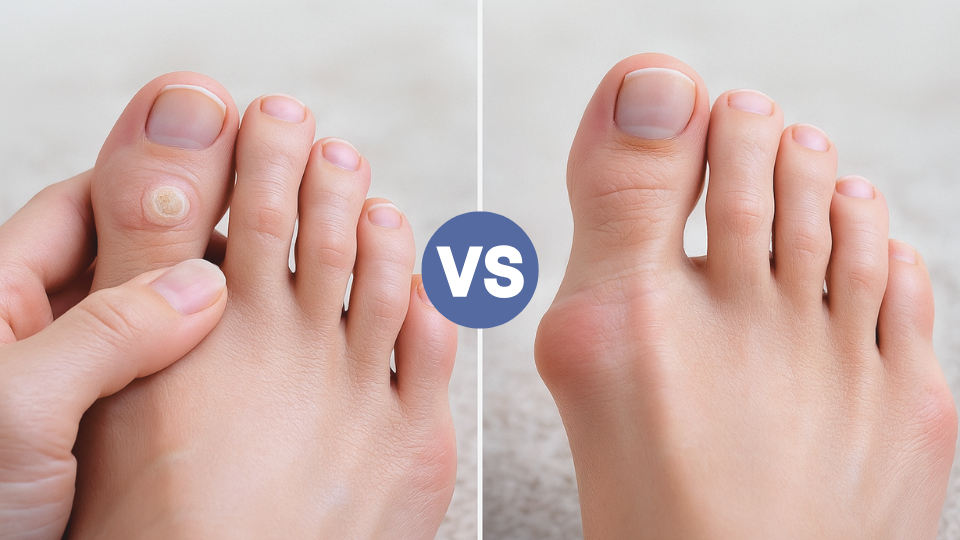


Corns and bunions are two very different foot conditions, yet many people confuse them because both can cause pain, pressure, and difficulty wearing shoes. One affects the skin, the other affects the bone and joint, but without understanding the difference, it’s easy to misinterpret symptoms.
Understanding the difference between a corn and a bunion helps patients choose the right treatment and avoid unnecessary discomfort. In this guide, we break down how each condition develops, the symptoms to watch for, and the most effective treatment options.
A corn is an area of thick, hardened skin that develops in response to pressure or friction. Unlike bunions, corns do not involve the bone or joint, they form on the surface of the skin.
Common locations include:
Corns form as the skin’s natural way of protecting itself from irritation. This often happens due to:
Corns are especially common when a shoe repeatedly rubs against a prominent toe joint or bony area.
Corns may be small, but they can cause significant discomfort. Symptoms often include:
Because they form where pressure is greatest, corns may appear on top of bunions, contributing to the confusion between the two conditions.
A bunion (hallux valgus) is a progressive deformity of the big toe joint. Instead of being a skin lesion, a bunion occurs when the big toe shifts inward toward the second toe. This causes the joint at the base of the big toe to protrude outward, forming a visible bump.
Several factors can contribute to bunion formation, including:
A key difference from corns is that bunions represent structural changes, not thickened skin.
Symptoms usually progress over time and may include:
Bunions may also cause calluses or corns because the protruding joint creates abnormal pressure inside shoes.
What’s the Difference Between a Corn and a Bunion?
Although both conditions can cause discomfort in similar areas, they are fundamentally different. This comparison can help clarify:
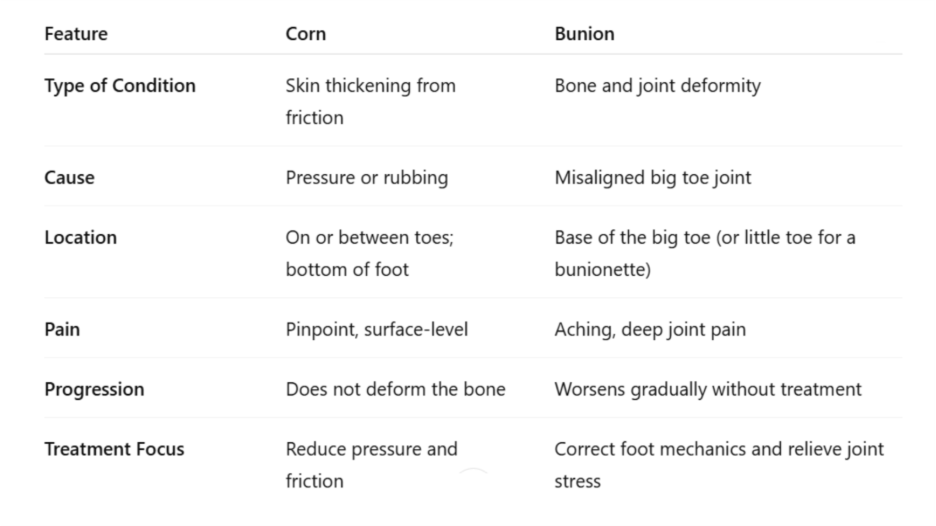
Because both conditions can appear together and cause pain near the toes, many people lump them together as corns and bunions on feet, but distinguishing between them is essential for choosing the right treatment.
While they are different conditions, corns and bunions often share contributing factors such as:
The difference lies in the body’s response:
Conservative Care
Because corns often return without addressing the underlying cause, a podiatrist may recommend:
Important: Avoid medicated corn pads unless advised; salicylic acid can burn healthy skin, especially in diabetic patients.
Surgery is the only way to permanently correct a bunion. It may be recommended if:
Modern bunion surgery techniques are more precise and often allow quicker recovery with less postoperative discomfort.
You should schedule an evaluation if:
A podiatrist can identify the root cause and create a personalized treatment plan before the problem worsens.
Corns and bunions may affect similar areas of the foot, but they require very different treatments. Early evaluation helps prevent chronic pain, recurring corns, or progressive bunion deformity.
Book an appointment today with FAS The Woodlands and take the first step toward healthier, more comfortable feet.
📍 Serving The Woodlands, Huntsville, and Houston

Learn the symptoms, swelling signs, and walking guidelines for stress fractures in the foot. Protect your recovery with expert podiatric care at FAS The Woodlands.