
Ingrown Toenails: When Home Care Stops Working
Ingrown toenails are among the most frequently treated conditions in podiatric medicine, and while many cases resolve with proper at-home care
Read More
--(3-x-1-in).jpg)



Hammer toes are a common foot deformity that often begin subtly and progress over time. What may start as a mild bend in one or more toes can gradually develop into a rigid, painful condition that interferes with walking, shoe comfort, and daily activities. Understanding what hammer toes are, how they develop, and which treatment options are most effective can help prevent long-term complications.
This guide explains what hammer toes look like at different stages, what causes hammer toes, available treatment approaches, prevention strategies, and when surgery may be considered.
Hammer toes occur when one or more toes bend abnormally at the middle joint, creating a hammer-like appearance. This deformity most commonly affects the second, third, or fourth toe and develops due to an imbalance in the muscles and tendons that normally keep the toe straight.
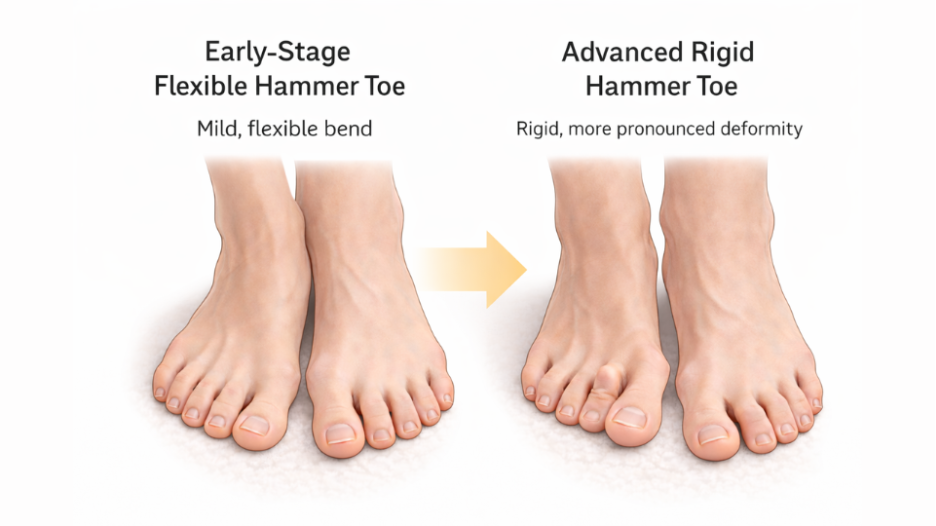
In early stages, hammer toes may remain flexible and can still be manually straightened. Without intervention, the deformity can become fixed, making the toe stiff and increasingly painful.
As hammer toes progress, visible changes in toe alignment become more noticeable. Common signs include:
When reviewing hammer toes pictures before and after, the progression is often clear, early deformities may appear mild, while advanced cases show a rigid, pronounced bend that affects shoe fit and comfort.
In early stage mild hammer toes, the toe can still be straightened manually. Symptoms are often limited to pressure, irritation, or discomfort when wearing shoes. At this stage, conservative care is usually effective.
Advanced or Rigid Hammer Toes
As the condition advances, the toe becomes fixed in a bent position. Pain may occur even when barefoot, and the risk of corns, ulcers, and skin breakdown increases. Advanced deformities are more difficult to treat without procedural intervention.
Several factors contribute to what causes hammer toes, most of which involve muscle imbalance or repeated pressure on the toes. Common causes include:
Over time, these factors pull the toe into a bent position that gradually becomes permanent.
Symptoms vary depending on severity but may include:
Symptoms often worsen as the deformity becomes more rigid.
Effective hammer toe treatment depends on the flexibility of the toe and how advanced the deformity has become.
Non-surgical care is most effective for flexible hammer toes and may include:
Because hammer toes can worsen over time, early evaluation plays an important role in preventing progression. Treatment is typically tailored based on symptom severity, toe flexibility, and overall foot mechanics. Learning how hammer toes are evaluated and managed can help patients make informed decisions about their care. More information about diagnostic approaches and treatment options is available on our hammertoes services page.
When conservative care no longer provides relief, hammertoe correction may be recommended. Advanced treatment focuses on correcting toe alignment, relieving pressure, and restoring function. The specific approach depends on the structure of the toe and the severity of the deformity.
A hammer toes operation may be considered when pain persists, the toe becomes rigid, or walking and shoe wear are significantly affected. Surgical treatment is designed to straighten the toe, reduce pain, and prevent further complications. The decision to proceed with surgery is individualized and based on symptoms, activity level, and overall foot health.
Although not all cases can be prevented, steps to help prevent hammer toe progression include:
Evaluation is recommended if you experience:
Early care often leads to better outcomes and may reduce the need for surgical treatment.
Hammer toes are progressive but treatable, especially when addressed early. If you’re noticing toe discomfort or visible changes, timely care can help protect your mobility and comfort.
Book an appointment today with FAS The Woodlands to explore treatment options and take the next step toward healthier feet.

Ingrown toenails are among the most frequently treated conditions in podiatric medicine, and while many cases resolve with proper at-home care

Learn to recognize the symptoms of an infected foot, key warning signs to watch for, and when to see a podiatrist for safe and effective treatment.